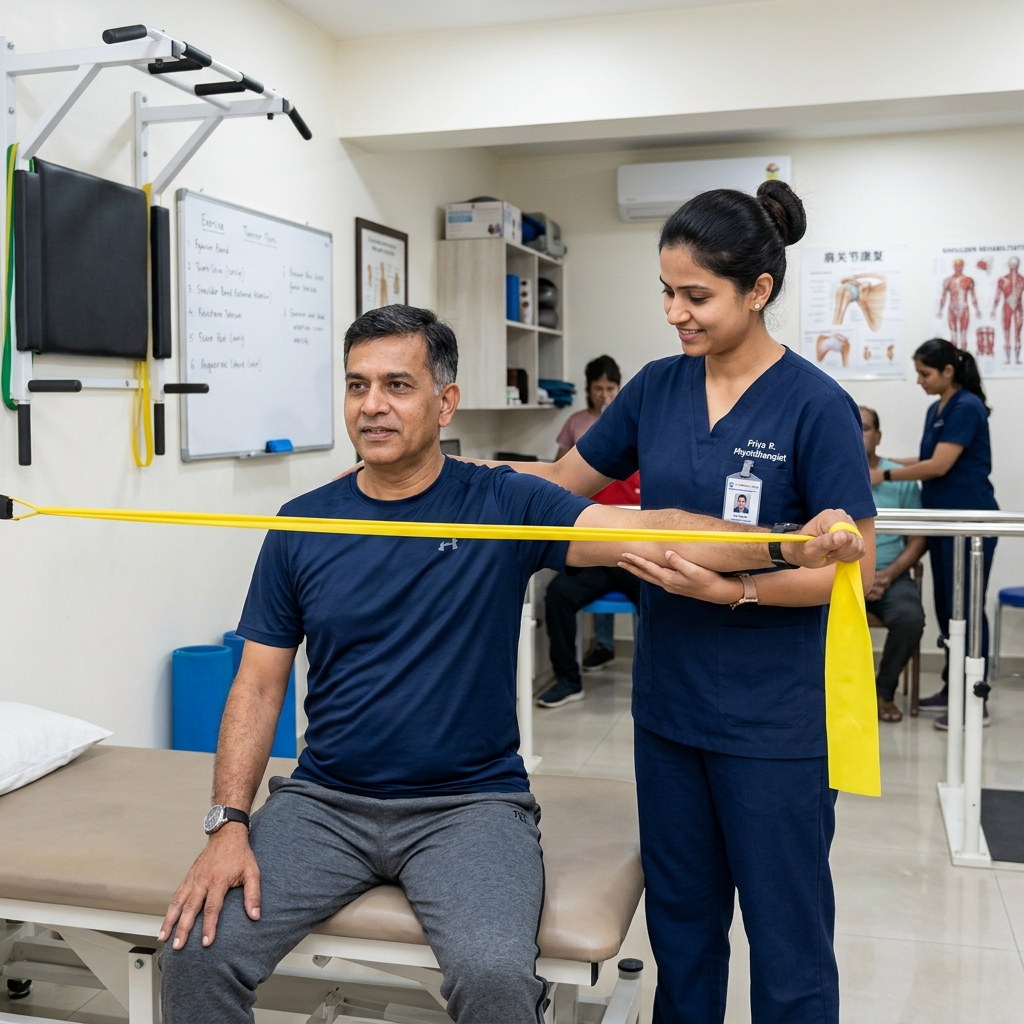
Difficulty reaching your back, combing your hair, or dressing due to severe shoulder stiffness is a classic sign of adhesive capsulitis, commonly known as frozen shoulder. Understanding how to manage this condition through targeted shoulder physiotherapy in Dehradun is key to escaping months of pain.
The Three Stages of Frozen Shoulder
Frozen shoulder progresses through distinct clinical phases. Recognizing these stages helps in tailoring the right treatment approach:
How Physiotherapy Resolves Frozen Shoulder
Waiting out a frozen shoulder can take years. Specialized physical therapy helps shorten the recovery timeline:
Our clinic on Rajpur Road, Dehradun, uses manual capsular stretching and progress monitoring to guide you safely through each recovery stage.
Frequently Asked Questions
QWhat causes a frozen shoulder?
Frozen shoulder is caused by thickening and tightening of the connective tissue surrounding the shoulder joint. It is more common in diabetics, women, and after shoulder immobilization.
QShould I exercise my shoulder if it is painful and stiff?
Yes, but the exercises must be gentle and pain-free. Aggressive stretching during the freezing stage can worsen inflammation. Consult a physiotherapist for a stage-specific program.
QCan hot and cold therapy help a frozen shoulder?
Yes. Moist heat before stretching helps relax tight tissues, while cold therapy after sessions reduces post-exercise inflammation and pain.
Related Topics
Disclaimer:This article is for informational purposes only and does not constitute medical advice. Individual physiotherapy treatment depends on a clinical assessment of each patient's condition. Consult a qualified physiotherapist for personalised advice and treatment.